Holiday quotes
Veterans Day quotes, verified
Veterans Day falls on November 11 each year. It began as Armistice Day, which marked the end of the fighting in World War I at 11 a.m. on November 11, 1918.
In 1954 Congress changed the name to Veterans Day, so the day would honor American veterans of every war. That October, President Eisenhower signed the first Veterans Day proclamation.
The quotes below honor service and sacrifice. Each one is checked against its original source, with a link so you can read it yourself.
See how we verify quotes and what our labels mean.
The first Veterans Day proclamation
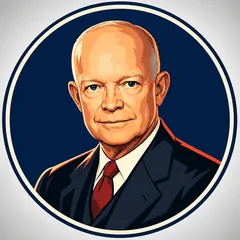 Dwight D. Eisenhower
“On that day let us solemnly remember the sacrifices of all those who fought so valiantly, on the seas, in the air, and on foreign shores, to preserve our heritage of freedom.”
Proclamation 3071, Veterans Day, 1954
From the proclamation Eisenhower signed in Washington on 8 October 1954 calling for the first national observance of Veterans Day on 11 November.
From the founding generation
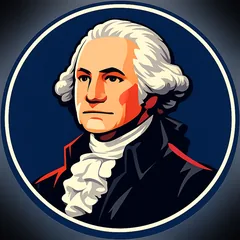 George Washington
“The fate of unborn Millions will now depend, under God, on the Courage and Conduct of this army.”
General Orders, 2 Jul 1776
From Washington's General Orders to the Continental Army at New York on 2 July 1776, the same day Congress voted for independence.
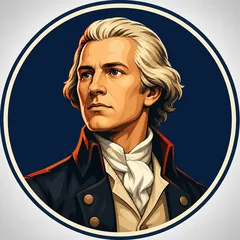 Nathan Hale
“I only regret that I have but one life to lose for my country.”
Reported Written down by someone else, not the speaker
Reported; last words before his execution in New York, as recounted second-hand by British officer John Montresor to Captain William Hull, 22 September 1776
The reported last words of Nathan Hale, a Continental Army captain aged 21, before he was hanged in Manhattan on 22 September 1776.
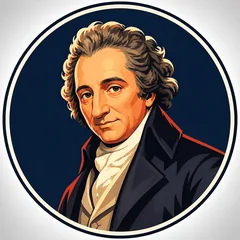 Thomas Paine
“These are the times that try men's souls. The summer soldier and the sunshine patriot will, in this crisis, shrink from the service of their country; but he that stands it now, deserves the love and thanks of man and woman.”
The American Crisis, No. I, 19 December 1776
The opening lines of The American Crisis, No. I, published in the Pennsylvania Journal on 19 December 1776.
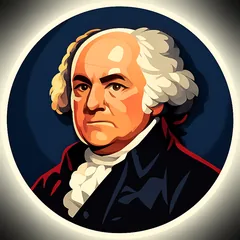 John Adams
“Posterity! You will never know, how much it cost the present Generation, to preserve your Freedom! I hope you will make a good Use of it.”
Letter to Abigail Adams, 26 Apr 1777
From a letter John Adams wrote to his wife Abigail on the evening of Saturday, 26 April 1777, while serving in the Continental Congress.
From Gettysburg to Normandy
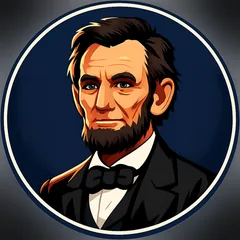 Abraham Lincoln
“From these honored dead we take increased devotion to that cause for which they gave the last full measure of devotion.”
Gettysburg Address, 19 November 1863
Spoken at the dedication of the Soldiers' National Cemetery at Gettysburg, Pennsylvania, on 19 November 1863, four and a half months after the battle.
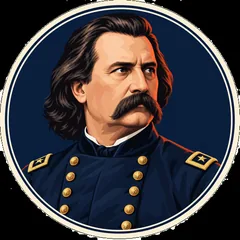 John A. Logan
“Let no vandalism of avarice or neglect, no ravages of time testify to the present or to the coming generations that we have forgotten as a people the cost of a free and undivided republic.”
General Orders No. 11, Grand Army of the Republic, 5 May 1868
From General Orders No. 11, issued in Washington on 5 May 1868 by John A. Logan as commander in chief of the Grand Army of the Republic.
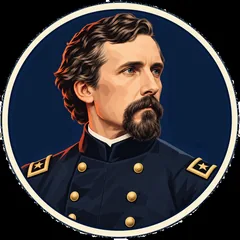 Joshua Lawrence Chamberlain
“In great deeds something abides. On great fields something stays. Forms change and pass; bodies disappear; but spirits linger, to consecrate ground for the vision-place of souls.”
Address as president of the day at the dedication of the Maine monuments, Gettysburg Court House; printed in Maine at Gettysburg: Report of Maine Commissioners (Portland, 1898), pp. 558-559, 3 October 1889
Spoken at Gettysburg on the evening of 3 October 1889, when the state of Maine formally dedicated its regimental monuments on the battlefield.
 Laurence Binyon
“They shall grow not old, as we that are left grow old: / Age shall not weary them, nor the years condemn. / At the going down of the sun and in the morning / We will remember them.”
"For the Fallen", stanza 4, first published in The Times (London); reprinted in Poems of To-Day: an Anthology (1915), 21 September 1914
Written in England in September 1914, weeks into the First World War, and first printed in The Times on 21 September 1914.
John McCrae
“Take up our quarrel with the foe: / To you from failing hands we throw / The torch; be yours to hold it high.”
"In Flanders Fields," Punch, 8 December 1915 (printed anonymously)
Written near Ypres, Belgium, in May 1915 and first printed without the author's name in the London magazine Punch on 8 December 1915.
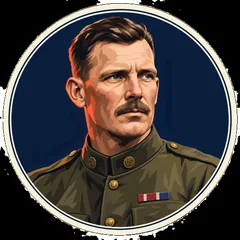 Alvin C. York
“I'd always loved my country and believed in it. I was willing to live and work for it. If it wanted me to, I was willing to die for it.”
Sergeant York: His Own Life Story and War Diary, ed. Tom Skeyhill (Doubleday, Doran, 1928), chapter 'Conscientious Objector', p. 165
From York's own account of 1917, published in 1928, describing the months after he was drafted and his claim as a conscientious objector was refused.
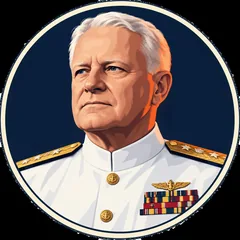 Chester W. Nimitz
“Among the Americans who served on Iwo Island, uncommon valor was a common virtue.”
CINCPACFLT Communique No. 300, announcing the capture of Iwo Jima; World War II Command File, Operational Archives Branch, Naval Historical Center, 17 March 1945
From Pacific Fleet Communique No. 300, issued by Admiral Nimitz's headquarters in March 1945 to announce that the battle for Iwo Jima had been won.
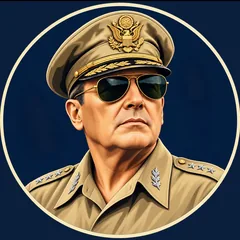 Douglas MacArthur
“The soldier above all other people prays for peace, for he must suffer and bear the deepest wounds and scars of war.”
Acceptance address on receiving the Sylvanus Thayer Award ('Duty, Honor, Country'), Corps of Cadets, U.S. Military Academy, West Point, New York, 12 May 1962
From General MacArthur's address to the Corps of Cadets at West Point, New York, on 12 May 1962, as he received the Sylvanus Thayer Award.
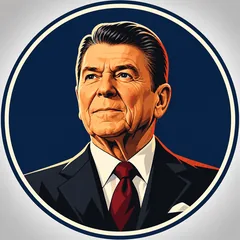 Ronald Reagan
“One's country is worth dying for, and democracy is worth dying for, because it's the most deeply honorable form of government ever devised by man.”
Remarks at a Ceremony Commemorating the 40th Anniversary of the Normandy Invasion, U.S. Ranger Monument, Pointe du Hoc, Normandy, France, 6 June 1984
Spoken at the U.S. Ranger Monument at Pointe du Hoc on 6 June 1984, the 40th anniversary of D-Day, with surviving Rangers of the 2nd Ranger Battalion seated in front of him.
Verified quotes by person
- Thomas Jefferson
- George Washington
- Abraham Lincoln
- Benjamin Franklin
- John Adams
- James Madison
- Theodore Roosevelt
- Dwight D. Eisenhower
- John F. Kennedy
- Ronald Reagan
A new quote every morning
Patriot Daily Quotes brings you one quote each morning, with the story behind it and a link to the original source.
Patriots, see each day through the Free Patriot Daily Quotes on the mobile app at:
 iPhone and iPad version coming soon